
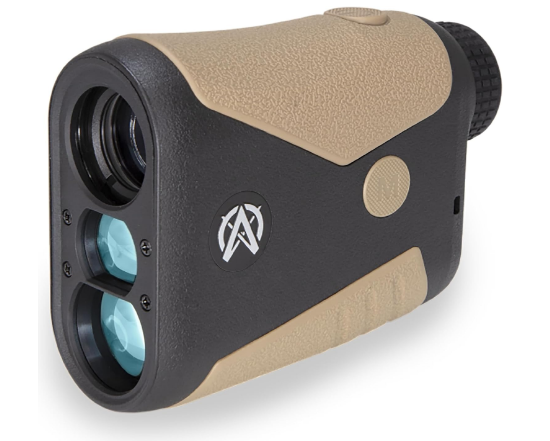
Best Hunting Rangefinder Under $300 offers clear optics and reliable distance readings for confident hunting trips. Choosing the right model helps hunters measure distances accurately, identify targets more effectively, and make informed decisions in the field. Look for essential features such as sufficient ranging distance, angle compensation, scan modes, a clear display, and durable, weather-resistant construction. By comparing accuracy, optical quality, ease of use, battery life, and warranty coverage, you can find a dependable hunting rangefinder that fits your budget without sacrificing essential performance.
Best Hunting Rangefinder Under $300
1. Vortex Triumph HD 850 Laser Rangefinder
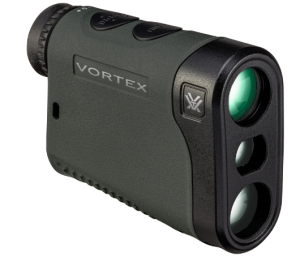
The Vortex Triumph HD 850 Laser Rangefinder is a practical and affordable option to consider among the best hunting rangefinders under $300. Designed for hunters who need reliable distance measurements without unnecessary complexity, it combines an HD optical system, multiple ranging modes, and a compact, weather-resistant design. It offers an advertised maximum range of 850 yards on reflective targets, 500 yards on trees, and 350 yards on game, making it particularly suitable for common deer-hunting distances. With 5x magnification, fully multicoated lenses, a straightforward black LCD display, and Vortex’s VIP Warranty, the Triumph HD 850 is an appealing choice for beginners and experienced hunters seeking dependable everyday performance.
Key Features
Reliable Ranging Performance for Hunting
The Vortex Triumph HD 850 is designed to deliver useful distance measurements at ranges commonly encountered during deer hunting. It can range reflective targets up to 850 yards, trees up to 500 yards, and game up to 350 yards, according to the manufacturer.
These different range ratings help set realistic expectations for field use. Reflective objects are generally easier for laser rangefinders to detect than animals, so the shorter advertised game range is particularly relevant when evaluating this model for hunting.
The rangefinder can help hunters measure distances to animals, trees, and landmarks before making decisions in the field. Its capabilities are well suited to hunters who primarily operate at moderate distances rather than those who need advanced long-range ranging performance.
Premium HD Optical System
The Triumph HD 850 features a high-definition optical system incorporating selected glass elements to provide sharp resolution, natural color reproduction, and good light transmission. Its fully multicoated lenses are designed to improve light transmission and image clarity.
The device combines 5x magnification with a 21 mm objective lens. This configuration helps users observe distant objects while keeping the rangefinder compact enough for convenient handheld use.
Clear optics are important when locating an animal against a complex background or identifying a landmark before measuring its distance. Although the HD optical system is designed to support good viewing performance, actual visibility depends on lighting, atmospheric conditions, and the user’s eyesight.
Three Ranging Modes for Different Situations
The Vortex Triumph HD 850 provides three ranging modes: Line of Sight (LOS), Horizontal Component Distance (HCD), and Scan mode.
Line of Sight displays the direct distance between the user and the target. HCD provides a horizontal distance calculation that can be useful when assessing targets at different elevations. Scan mode allows users to obtain continuous distance readings while moving the rangefinder across multiple objects.
These options make the device useful in a variety of hunting environments, including open fields and sloping terrain. HCD is especially helpful when the direct line-of-sight distance differs from the horizontal distance relevant to many shooting calculations.
Hunters should understand which mode is active and use appropriate ballistic information for their equipment rather than relying on distance readings alone.
Three Target Modes for Improved Ranging
In addition to its ranging modes, the Triumph HD 850 offers Normal, First, and Last target modes. These settings help users select how the rangefinder prioritizes objects when several targets appear along the same line of sight.
Normal mode supports general distance measurement, while First and Last modes help prioritize nearer or farther detectable objects. These functions can be helpful when ranging through vegetation or when foreground objects overlap with a more distant target.
For deer hunters, target selection can make it easier to obtain a useful reading when branches, trees, or other objects are present in the field of view. Users should still confirm that the displayed distance corresponds to the intended target.
Clear Black LCD Display
The Triumph HD 850 uses a black LCD display to show distance readings. Its straightforward presentation suits hunters who prefer a traditional display without additional illuminated-color options.
The display is designed to provide reliable visibility in bright and lower-light conditions. However, the readability of a black LCD can vary with background brightness, so users who regularly hunt in very dark conditions may prefer to compare it with rangefinders featuring illuminated red or OLED displays.
The simple display complements the rangefinder’s practical design, keeping the emphasis on obtaining distance information without an unnecessarily complicated interface.
Waterproof, Shockproof, and Comfortable to Hold
The Vortex Triumph HD 850 is designed to withstand the demands of outdoor use, with waterproof and shockproof construction. Its soft-touch exterior provides a comfortable grip and helps users maintain control when their hands are damp or when they are wearing gloves.
These features are useful for hunters who move through woodland, grassland, or changing weather conditions. A secure grip also reduces the likelihood of accidentally dropping the device while aiming it toward a target.
Although it is built for field use, hunters should follow the manufacturer’s care instructions and avoid unnecessary exposure to impact or conditions beyond its specified protection.
Soft Carry Case and Vortex VIP Warranty
The Triumph HD 850 includes a soft carry case for convenient storage and transport. The case helps protect the rangefinder from everyday scratches and makes it easier to keep the device accessible in a hunting pack.
Another major advantage is Vortex’s unlimited, unconditional, lifetime VIP Warranty. According to the supplied terms, Vortex promises to repair or replace an item if it becomes damaged or defective. The warranty is fully transferable.
The warranty does not cover loss, theft, deliberate damage, or cosmetic damage that does not affect performance. Buyers should review the complete warranty terms and confirm the process for claims in their country before purchasing.
Specifications
- Product name: Vortex Triumph HD 850 Laser Rangefinder
- Intended use: Hunting, shooting, and outdoor distance measurement
- Maximum reflective-target range: 850 yards
- Maximum tree range: 500 yards
- Maximum game range: 350 yards
- Magnification: 5x
- Objective lens diameter: 21 mm
- Optical system: HD optical system with selected glass elements
- Lens coatings: Fully multicoated
- Display: Black LCD
- Ranging modes: Line of Sight (LOS), Horizontal Component Distance (HCD), and Scan
- Target modes: Normal, First, and Last
- Construction: Waterproof and shockproof
- Exterior: Soft-touch finish for a secure grip
- Included accessory: Soft carry case
- Warranty: Vortex VIP Warranty, unlimited, unconditional, lifetime, and transferable, subject to exclusions
- Price category: Intended for consideration among hunting rangefinders under $300; verify the current selling price before buying
Pros
- Practical ranging capability for common deer-hunting distances.
- Advertised game-ranging distance of up to 350 yards.
- Maximum reflective-target range of 850 yards.
- HD optical system designed for sharp resolution and natural color.
- Fully multicoated lenses support light transmission and clarity.
- Compact 5×21 optical configuration.
- LOS and HCD modes provide direct and horizontal distance information.
- Scan mode supports continuous ranging across multiple targets.
- Normal, First, and Last target modes offer useful target-selection options.
- Straightforward black LCD display.
- Waterproof and shockproof construction.
- Soft-touch exterior provides a secure grip in wet conditions or when wearing gloves.
- Soft carry case included.
- Vortex VIP Warranty offers long-term repair or replacement coverage, subject to exclusions.
Cons
- The maximum 850-yard range applies to reflective targets, not game animals.
- The advertised 350-yard game range is shorter than that of some long-range hunting rangefinders.
2. Bushnell R5 2000 6×25 Hunting Laser Rangefinder with AB Ultralite & BT
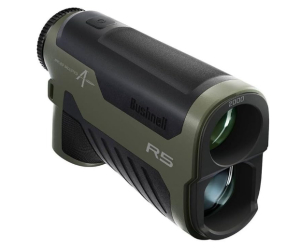
The Bushnell R5 2000 6×25 Hunting Laser Rangefinder with Applied Ballistics Ultralite and Bluetooth is a feature-rich option to consider among the best hunting rangefinders under $300. Designed for hunters and shooting enthusiasts who need reliable distance measurements and ballistic assistance, this rangefinder combines a 2,000-yard maximum reflective-target range, HD optics, angle range compensation, and smartphone connectivity. Its onboard Applied Ballistics Ultralite system provides ballistic solutions up to 800 yards, helping users calculate appropriate elevation and wind adjustments for their shooting setup. With weather-resistant construction and a lens coating designed to repel environmental contaminants, the R5 2000 aims to deliver dependable performance in demanding outdoor conditions.
Key Features
Extended Range Capability and Accuracy
One of the most appealing features of the Bushnell R5 2000 is its long-range measurement capability. It can measure reflective targets at distances of up to 2,000 yards, making it suitable for hunters and shooters who regularly assess distances across open fields, hillsides, and other expansive landscapes. The manufacturer specifies accuracy of approximately ±1 yard, supporting dependable distance measurements for hunting preparation and shooting calculations.
However, the maximum advertised range applies to reflective targets rather than animals. Actual ranging distances can vary depending on target size, surface characteristics, lighting, vegetation, and weather conditions. Hunters should therefore evaluate its practical performance on deer-sized targets rather than relying solely on the maximum range figure.
Applied Ballistics Ultralite and Bluetooth Connectivity
The onboard Applied Ballistics Ultralite system is a major feature of the Bushnell R5 2000 AB. It provides ballistic solutions up to 800 yards, helping users determine the appropriate elevation adjustments for their specific shooting setup. This functionality can be valuable for experienced rifle hunters who need more information than a simple distance reading.
Integrated Bluetooth allows the rangefinder to connect to the free Bushnell Ballistics app, where users can synchronize and customize ballistic profiles. Depending on the configured profile and supported inputs, the system can help calculate elevation and wind corrections for different shooting conditions.
For best results, users should enter accurate information about their ammunition, projectile, muzzle velocity, and environmental conditions. Ballistic calculations are only as reliable as the information supplied, and users should verify the device’s exact supported functions before purchasing.
HD Optical System for Clear Viewing
The Bushnell R5 2000 features a High Definition optical system designed to deliver good light transmission, contrast, and resolution. Clear optics are particularly important when identifying potential targets, locating landmarks, and aligning the rangefinder with distant objects.
Its optical design aims to provide sharp viewing performance in a compact handheld format. This can be helpful when scanning open terrain or assessing a hunting area before taking a distance measurement. Actual image brightness and clarity will depend on ambient lighting, atmospheric conditions, and the user’s vision.
The 6×25 configuration combines six-power magnification with a 25 mm objective lens. This provides useful magnification for field ranging while keeping the device relatively portable.
Exo Barrier Lens Coating and Weather Resistance
Outdoor equipment must cope with dust, moisture, fingerprints, and changing weather. The R5 2000 addresses these challenges with Bushnell’s EXO Barrier lens coating, designed to repel water, oil, dust, and debris from the lens surfaces. Keeping contaminants from adhering to the lenses can help preserve visibility and reduce the need for frequent cleaning.
The rangefinder also features an IPX4-rated housing, providing protection against water splashes from different directions. This makes it suitable for many ordinary outdoor conditions, although IPX4 does not mean that the device is waterproof against immersion or prolonged exposure to heavy water.
For hunters who travel through damp grass, encounter light rain, or work in variable weather, these protective features are useful advantages. The lenses should still be cleaned with appropriate materials and the device stored safely after use.
Angle Range Compensation
The Bushnell R5 2000 includes Angle Range Compensation, which helps account for changes in elevation when measuring targets uphill or downhill. In sloping terrain, the direct line-of-sight distance can differ from the horizontal distance used in many shooting calculations.
Angle compensation can therefore provide useful information when hunting in mountainous areas, on ridgelines, or across uneven ground. It helps hunters better understand the distance involved rather than relying exclusively on the straight-line measurement.
As with any rangefinder, users should understand the displayed readings and how they relate to their particular equipment. Angle compensation is not a substitute for appropriate ballistic calculations, safe target identification, or sound shooting judgment.
Simple Controls and Secure Handling
Despite its advanced ballistic functions, the Bushnell R5 2000 is designed with straightforward one-button operation for ranging. This helps users take measurements without navigating an unnecessarily complicated control system.
Its rubber grips feature a diamond-tread texture intended to improve handling and provide a secure hold. This is especially useful when wearing outdoor clothing or operating the rangefinder in damp conditions.
The combination of accessible controls and textured grips makes the R5 2000 practical for field use, whether a hunter is measuring a stationary target or scanning several locations to assess distances.
Vault Lite LRF Pouch and Bluetooth App Support
The rangefinder includes a Vault Lite laser rangefinder pouch, providing a convenient way to carry and protect the device when it is not in use. A dedicated pouch can help reduce scratches, protect the housing during transport, and keep the equipment accessible in a hunting pack.
Bluetooth compatibility with the Bushnell Ballistics app adds another layer of functionality by allowing users to manage supported ballistic profiles. Hunters who already use ballistic calculations may appreciate having distance measurement and ballistic assistance available through a connected system.
Before buying, confirm the app’s compatibility with your smartphone and review the specific features supported by the R5 2000 AB version.
Specifications
- Product name: Bushnell R5 2000 AB Laser Rangefinder
- Intended use: Hunting and shooting
- Maximum reflective-target range: Up to 2,000 yards
- Specified accuracy: Approximately ±1 yard
- Magnification: 6x
- Objective lens diameter: 25 mm
- Optical system: HD optical system
- Ballistic technology: Applied Ballistics Ultralite
- Maximum ballistic solution range: Up to 800 yards
- Connectivity: Bluetooth
- Mobile application: Bushnell Ballistics app
- Ballistic functions: Supported elevation and wind adjustments based on configured shooting profiles
- Angle compensation: Angle Range Compensation
- Lens coating: EXO Barrier
- Water resistance: IPX4
- Controls: One-button operation
- Grip: Rubberized diamond-tread texture
- Included accessory: Vault Lite LRF pouch
- Price category: Considered here as a potential under-$300 option; verify the current retail price before purchasing
Pros
- Long advertised ranging capability of up to 2,000 yards on reflective targets.
- Manufacturer-specified accuracy of approximately ±1 yard.
- Onboard Applied Ballistics Ultralite provides ballistic solutions up to 800 yards.
- Bluetooth connectivity enables supported ballistic-profile synchronization and customization.
- HD optics designed for clear viewing, contrast, and light transmission.
- Angle Range Compensation helps account for uphill and downhill measurements.
- EXO Barrier coating helps repel water, oil, dust, and debris from the lenses.
- IPX4-rated protection against water splashes.
- One-button operation makes distance measurement straightforward.
- Textured rubber grips improve handling.
- Vault Lite LRF pouch is included for carrying and protection.
- Combines ranging and ballistic assistance in one compact device.
Cons
- The 2,000-yard maximum applies to reflective targets, not deer or other animals.
- Applied Ballistics Ultralite solutions are limited to the advertised range of up to 800 yards.
3. Nikon PROSTAFF 1000i 6×20 Laser Rangefinder
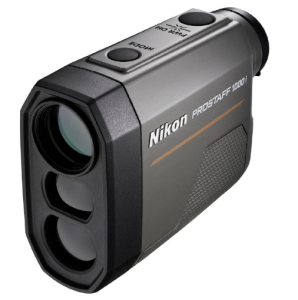
The Nikon PROSTAFF 1000i 6×20 Laser Rangefinder is a compact and capable option to consider among the best hunting rangefinders under $300. Designed for bowhunters, rifle hunters, and outdoor enthusiasts, it combines a maximum advertised range of 1,000 yards on reflective surfaces with Nikon’s ID Incline/Decline Technology and TRU TARGET measurement system. Its six-power magnification, multicoated optics, weather-resistant construction, and pocket-friendly design make it suitable for hunters who need dependable distance measurements without carrying bulky equipment. With straightforward controls and flexible ranging modes, the PROSTAFF 1000i offers a practical balance of portability, accuracy, and functionality for hunting in varied terrain.
Key Features
ID Incline/Decline Technology for Angled Shots
One of the most useful features of the Nikon PROSTAFF 1000i is its ID (Incline/Decline) Technology. This system calculates the true horizontal distance to a target when ranging uphill or downhill, supporting more appropriate distance estimates on sloping terrain. It operates at angles of up to ±89 degrees, according to the supplied specifications.
This functionality is particularly valuable for hunters operating in mountainous regions, elevated stands, valleys, or uneven woodland. Since a target’s direct line-of-sight distance can differ from its horizontal distance, angle compensation helps users account for elevation changes when evaluating a shot.
For bowhunters and rifle hunters alike, this feature can improve distance assessment in challenging terrain. However, hunters should understand the displayed measurements and apply the appropriate shooting and safety practices for their equipment.
TRU TARGET Technology for Complex Hunting Environments
The PROSTAFF 1000i features Nikon’s TRU TARGET measurement technology, which offers First Target Priority and Distant Target Priority modes. These options help users select the object they want to measure when several objects appear along the same line of sight.
First Target Priority is useful when measuring a closer object, such as an animal partly obscured by branches. Distant Target Priority helps measure the farthest detectable object in a group, which can be useful for ranging landmarks or assessing distances beyond foreground obstacles.
This flexibility can make the rangefinder more practical in wooded areas, where branches, shrubs, and overlapping objects may complicate distance measurement. Nevertheless, users should always confirm that the reading corresponds to the intended target rather than surrounding vegetation.
Six-Power Magnification and Multicoated Optics
The Nikon PROSTAFF 1000i uses a 6×20 optical configuration, combining six-power magnification with a 20 mm objective lens. Its anti-reflection multicoated optics are designed to provide bright, sharp images with natural-looking color.
Six-power magnification helps hunters observe distant objects while locating the target they want to range. The optical system also supports wildlife observation and general outdoor use, making the device useful beyond hunting alone.
The 20 mm objective lens helps keep the overall unit compact, although its light-gathering capability may be more limited than that of larger optical systems in very low-light conditions. Hunters who frequently operate around dawn or dusk should consider this factor alongside the clarity of the display and the rangefinder’s practical ranging performance.
Accurate Distance Measurement and 1,000-Yard Range
The PROSTAFF 1000i offers a maximum advertised range of 1,000 yards on reflective surfaces. Its specified accuracy is ±1 yard at distances up to 100 yards and ±2 yards beyond 100 yards.
These measurements make it suitable for many ordinary hunting situations, particularly where hunters need to estimate distances before approaching an area or preparing for a shot. Its range can also be useful for measuring landmarks and assessing open terrain.
The maximum range should not be confused with the effective range on animals. Deer and other non-reflective targets may be measurable at substantially shorter distances depending on their size, background, weather, and lighting. Hunters should assess the unit based on realistic animal-ranging performance rather than its reflective-target maximum alone.
Spot and Continuous Measurement Modes
The rangefinder provides Spot and Continuous Measurement modes to accommodate different ranging situations. Spot measurement is suitable when the user wants a single distance reading, while continuous measurement helps track distances as the device moves across different objects.
Continuous readings are available for up to eight seconds, according to the supplied information. This is useful when scanning a hillside, comparing distances to several landmarks, or attempting to obtain a stable reading on a target.
The ability to choose between these modes gives hunters flexibility without requiring a complicated operating procedure. It can be especially helpful when moving through unfamiliar terrain or evaluating several potential observation points.
Compact, Pocket-Friendly Construction
Portability is another important advantage of the Nikon PROSTAFF 1000i. Its dimensions are approximately 3.6 × 2.9 × 1.5 inches, allowing it to fit comfortably in many pockets, small equipment pouches, and hunting packs.
The compact design is convenient for hunters who spend long hours walking through fields or woodland and want to minimize the weight of their equipment. It is also suitable for hiking, travel, and wildlife observation.
Despite its small size, the device offers a six-power optical system and multiple ranging functions. This makes it a practical candidate for hunters who value ease of carrying as much as measurement capability.
Weather Resistance and User-Friendly Controls
The Nikon PROSTAFF 1000i has an IPX4-equivalent water-resistant housing designed to withstand water splashes encountered during ordinary outdoor use. This provides useful protection when hunting in light rain or dealing with damp conditions, although it should not be submerged or treated as fully waterproof.
Its two-button control layout is intended to keep operation simple. Users can switch between supported measurement functions and select metres or yards for distance readings.
The rangefinder also provides a maximum eye relief of 17 mm and an exit pupil of 3.3 mm. These optical specifications may help eyeglass wearers position their eyes comfortably, although individual comfort can vary depending on the glasses and how the device is held.
Specifications
- Product name: Nikon PROSTAFF 1000i Laser Rangefinder
- Intended use: Hunting, shooting, hiking, and wildlife observation
- Magnification: 6x
- Objective lens diameter: 20 mm
- Maximum range: 1,000 yards on reflective surfaces
- Accuracy up to 100 yards: ±1 yard
- Accuracy beyond 100 yards: ±2 yards
- Angle compensation: Nikon ID Incline/Decline Technology
- Supported angle range: Up to ±89 degrees
- Target selection: TRU TARGET First Target Priority and Distant Target Priority
- Measurement modes: Spot and continuous measurement
- Continuous measurement duration: Up to 8 seconds
- Optical coatings: Anti-reflection multicoated optics
- Maximum eye relief: 17 mm
- Exit pupil: 3.3 mm
- Dimensions: Approximately 3.6 × 2.9 × 1.5 inches
- Water resistance: IPX4-equivalent
- Controls: Two-button operation
- Distance units: Metres and yards
- Power: Single battery-powered unit; confirm the exact battery specification for the supplied version
- Price category: Suitable for consideration in the under-$300 category; verify the current retail price before buying
Pros
- Nikon ID Technology calculates horizontal distance for uphill and downhill targets.
- Supports angle compensation at inclines and declines of up to ±89 degrees.
- TRU TARGET technology provides First Target and Distant Target Priority modes.
- Maximum advertised range of 1,000 yards on reflective surfaces.
- Specified accuracy of ±1 yard up to 100 yards and ±2 yards beyond.
- Six-power magnification supports target observation and distance measurement.
- Multicoated optics are designed to provide clear, sharp images.
- Spot and continuous measurement modes offer flexibility in the field.
- Compact dimensions make it easy to carry in a pocket or hunting pack.
- IPX4-equivalent water resistance supports use in ordinary wet-weather conditions.
- Two-button operation is straightforward for beginners.
- Maximum 17 mm eye relief may accommodate some eyeglass wearers.
- Useful for bow hunting, rifle hunting, hiking, and wildlife observation.
Cons
- The 1,000-yard maximum applies to reflective surfaces, not necessarily animals.
- Practical ranging distance on deer may be considerably shorter than the advertised maximum.
4. Leupold RX-1400I TBR/W Gen 2 w/Flightpath Rangefinder, Black/Gray
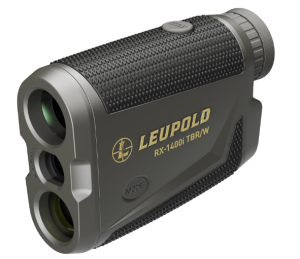
The Leupold RX-1400i TBR/W Gen 2 w/Flightpath Rangefinder, Black/Gray is a feature-rich option to consider among the best hunting rangefinders under $300. Designed for bowhunters and rifle hunters, this compact laser rangefinder combines long-range distance measurement, True Ballistic Range with Wind (TBR/W) technology, and specialized archery functions in a lightweight, rugged housing. It offers an advertised ranging distance of up to 1,400 yards on reflective objects and 1,200 yards on trees, making it useful for evaluating distances across open terrain. Its bright red TOLED display, adjustable brightness, and advanced ballistic calculations further distinguish it from basic rangefinders aimed primarily at measuring distance.
Key Features
True Ballistic Range and Wind Technology
One of the strongest features of the Leupold RX-1400i TBR/W Gen 2 is its proprietary True Ballistic Range/Wind technology. Rather than relying solely on the direct line-of-sight distance, TBR/W provides ballistically calculated ranges that account for relevant shooting angles and ballistic conditions. This can help rifle hunters make more informed elevation adjustments when shooting uphill or downhill.
The rangefinder also provides a wind hold point for a 10 mph crosswind at a 90-degree angle, with calculations available out to 800 yards. This feature gives hunters additional information for evaluating wind effects on a projectile and preparing appropriate aiming corrections.
These functions can be particularly useful for experienced rifle hunters who understand ballistic profiles and regularly shoot across varied terrain. However, the wind solution is based on the specified wind conditions; actual wind speed and direction may differ along the projectile’s path. Users should verify the selected ballistic settings and follow safe shooting practices.
Flightpath Technology for Bowhunters
The RX-1400i TBR/W Gen 2 includes a selectable Bow mode with Leupold’s Flightpath technology. This feature is designed to help archers identify potential arrow obstructions between themselves and the target.
When hunting in wooded areas, branches and other obstacles can interfere with an arrow’s trajectory even when the target appears unobstructed. Flightpath helps the archer assess potential clearance issues while the rangefinder calculates an angle-compensated distance.
This combination makes the device more versatile than a basic laser rangefinder that only reports distance. Bowhunters can use the ranging information to prepare for a shot while considering elevation and potential obstructions. Nevertheless, the feature should support, rather than replace, direct assessment of the shooting lane and safe target conditions.
Long-Range Distance Measurement
The Leupold RX-1400i offers an advertised maximum ranging distance of 1,400 yards on reflective objects and 1,200 yards on trees. These capabilities make it suitable for measuring distant landmarks, assessing open terrain, and preparing for hunting situations where distance estimation is important.
Its proprietary ranging engine is designed to provide fast measurements and reliable readings. This can help users obtain distance information efficiently without repeatedly struggling to acquire a target.
It is important to distinguish the maximum advertised range from the practical range on animals. Reflective surfaces are generally easier for laser rangefinders to detect than animals with irregular outlines or backgrounds that blend into the surrounding vegetation. Actual deer-ranging performance will depend on target size, lighting, weather, and terrain.
Bright Red TOLED Display
Another important feature is the selectable TOLED display, which uses bright red numbers and letters to present distance readings. Its adjustable brightness settings allow users to adapt the display to changing lighting conditions.
A clear display can be especially useful when hunting in shaded woodland, during overcast weather, or around dawn and dusk. Red illuminated readings can be easier to distinguish than a dark display against some backgrounds, although visibility depends on the surrounding light and the user’s eyesight.
The adjustable brightness also helps users find a comfortable setting for their environment. This makes the RX-1400i a practical option for hunters who want their distance readings to remain easy to read without unnecessarily distracting from the target.
Lightweight and Rugged Construction
The RX-1400i TBR/W Gen 2 is built around a rugged polymer housing designed to combine durability with low weight. This construction makes it convenient for hunters who carry their equipment over long distances or spend extended periods outdoors.
Its black and gray finish gives it a practical outdoor appearance, while the compact handheld design allows it to fit into many hunting packs and equipment pouches. The housing is intended to withstand the demands of regular field use.
Although the rangefinder is designed for rugged conditions, buyers should confirm its precise water-resistance rating and care instructions before exposing it to heavy rain or prolonged moisture.
Versatility for Rifle and Bow Hunting
The combination of TBR/W ballistic calculations and selectable Bow mode makes this rangefinder suitable for two distinct hunting applications. Rifle hunters can benefit from ballistically calculated distances and wind hold information, while bowhunters can use angle compensation and Flightpath technology to assess potential arrow clearance.
This versatility may appeal to hunters who participate in different forms of hunting throughout the year and want one device for multiple activities.
The advanced functions do require some familiarity with ballistic and ranging concepts. Beginners may need time to understand the available settings, but experienced hunters may appreciate the additional information these features provide.
Specifications
- Product name: Leupold RX-1400i TBR/W Gen 2 w/Flightpath Rangefinder
- Model number: 183727
- Color: Black/Gray
- Intended use: Rifle hunting, bowhunting, and shooting
- Maximum reflective-object range: 1,400 yards
- Maximum tree-ranging distance: 1,200 yards
- Ballistic technology: True Ballistic Range/Wind (TBR/W)
- Wind hold calculation: 10 mph wind at a 90-degree angle, out to 800 yards
- Archery features: Selectable Bow mode with Flightpath technology
- Angle compensation: Ballistically calculated ranges for angled shots
- Display: Selectable red TOLED display
- Display brightness: Adjustable
- Ranging engine: Proprietary Leupold ranging engine
- Housing: Lightweight, rugged polymer
- Price category: Potential under-$300 option; verify the current price before purchasing
Pros
- Long advertised ranging distance of up to 1,400 yards on reflective objects.
- Measures trees at advertised distances of up to 1,200 yards.
- TBR/W technology provides ballistically calculated ranges for angled shots.
- Wind hold calculations for a specified 10 mph crosswind at a 90-degree angle.
- Wind hold information available out to 800 yards.
- Flightpath technology helps bowhunters identify potential arrow obstructions.
- Dedicated Bow mode provides archery-focused functionality.
- Bright red TOLED display improves readability in many lighting conditions.
- Adjustable display brightness supports changing outdoor environments.
- Proprietary ranging engine is designed for fast, accurate measurements.
- Lightweight polymer housing is convenient for extended hunting trips.
- Useful combination of rifle-hunting and bowhunting features.
Cons
- The maximum 1,400-yard range applies to reflective objects, not necessarily animals.
- Practical ranging distance on deer may be substantially shorter than the advertised maximum.
5. OTX/HTX-1600 1760-Yard Laser Rangefinder for Hunting
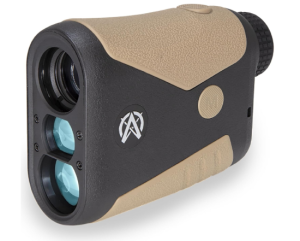
The Astra Optix OTX/HTX-1600 1760-Yard Laser Rangefinder is a feature-packed option to consider among the best hunting rangefinders under $300. Designed for hunters, archers, and shooting enthusiasts, this compact device combines long-range distance measurement, angle compensation, multiple ranging modes, and premium all-glass optics. It can range reflective targets up to 1,760 yards and deer at approximately 800 yards under suitable conditions. With fast measurements, durable rubber-armored construction, and a choice of display technologies, the OTX/HTX-1600 provides a versatile solution for hunters who need dependable distance information across different terrains and lighting conditions.
Key Features
Long-Range Performance and Accuracy
One of the main strengths of the Astra Optix OTX/HTX-1600 is its impressive advertised ranging capability. It measures reflective targets at distances of up to 1,760 yards, buildings at approximately 1,500 yards, trees at up to 1,000 yards, and deer at approximately 800 yards. This versatility makes it suitable for evaluating distances across open fields, wooded areas, and expansive hunting grounds.
The manufacturer specifies accuracy of approximately ±1 yard, providing useful precision for hunting and shooting measurements. Reliable distance readings can help hunters assess their surroundings and make better-informed decisions when preparing for a shot.
However, the maximum advertised range depends on the target’s reflectivity and size. Actual ranging performance on deer may vary with vegetation, weather, lighting, and the animal’s position. The stated 800-yard deer range should therefore be treated as an approximate maximum rather than a guaranteed detection distance.
Red OLED Display for Low-Light Visibility
The OTX-1600 features an adjustable red OLED display designed to make distance readings easier to see in changing lighting conditions. It includes five brightness settings, allowing users to select a suitable level for bright daylight, shaded woodland, and lower-light hunting environments.
The display also offers three selectable reticle options, giving users flexibility in how the aiming point appears during target acquisition. These features can be especially helpful when hunters need to acquire a target quickly without struggling to read the displayed measurement.
The HTX-1600 differs by using a black High Transmission HD LCD display instead of the red OLED system. Both models share the same core ranging platform, but the OTX-1600 may be the more appealing choice for users who prefer an illuminated red readout for changing light conditions.
Angle Compensation and Multiple Ranging Modes
The OTX/HTX-1600 includes several operating modes designed for different outdoor activities. Horizontal/Angle-Corrected Mode provides a horizontal distance calculation for targets above or below the user’s position, while Line-of-Sight Angle Mode provides direct distance and angle information.
Archery Mode and Gun Mode offer additional functionality for bowhunters and rifle hunters. Golf Mode includes Pin Lock, while Scan Mode enables continuous ranging as the user moves across multiple targets.
Angle compensation is particularly useful in hilly terrain because the direct line-of-sight distance can differ from the horizontal distance relevant to shooting calculations. Scan Mode is also helpful when comparing distances to trees, landmarks, or other objects across a hunting area.
These options make the rangefinder adaptable to several outdoor applications. Users should still understand which measurement mode is active and apply the appropriate ballistic information for their equipment.
Premium 6×21 Optics and Light Transmission
The Astra Optix OTX/HTX-1600 uses a 6×21 all-glass optical system with fully multicoated lenses. The six-power magnification helps users locate distant objects, while the 21 mm objective lens maintains a compact form suitable for handheld use.
The manufacturer specifies full-system light transmission of 70.9%, which is intended to support a bright, clear viewing experience with good resolution. The lenses also feature protective coatings designed to help manage moisture during outdoor use.
These optical characteristics are useful when identifying landmarks, locating potential targets, and positioning the rangefinder before measuring distance. Although the optical system is designed for clarity, actual visibility will still depend on ambient light, atmospheric conditions, and the user’s eyesight.
Fast 0.10-Second Ranging
According to the supplied specifications, the OTX/HTX-1600 can deliver distance measurements in approximately 0.10 seconds. This rapid response can be advantageous when checking several objects or scanning a hunting area where conditions may change quickly.
Fast measurements reduce the time spent waiting for a reading and make it easier to compare distances between potential targets and nearby landmarks. Combined with Scan Mode, this feature supports efficient distance assessment across open terrain.
Actual measurement speed may vary depending on the target, range, environmental conditions, and the mode selected. Even with fast ranging, hunters should take sufficient time to confirm target identity and ensure a safe shooting environment.
Durable, Weather-Resistant Construction
The OTX/HTX-1600 is designed for outdoor use with a rubber-armored composite body that provides a secure grip and added protection against everyday handling. Its nitrogen-filled construction and weather-resistant design are intended to support reliable operation in changing field conditions.
The device carries an IPX4 water-resistance rating, meaning it is protected against water splashes from different directions. This can be useful when hunting in light rain or damp environments, although it does not mean the rangefinder is waterproof against immersion or prolonged heavy exposure to water.
The rubber armor also helps make the rangefinder comfortable to hold during extended periods outdoors. Users should nevertheless store it in its carrying case when not in use and avoid unnecessary exposure to moisture or impact.
Complete Accessory Package and Lifetime Warranty
The Astra Optix OTX/HTX-1600 comes with several accessories that support immediate use and convenient transport. The package includes a soft premium carry case, a microfiber lens-cleaning cloth, an adjustable neck-style lanyard, a CR2 battery, an Astra Optix decal sticker, and a Quick Start Guide.
The included battery means buyers can get started without first sourcing a compatible power supply. The carrying case helps protect the device during transport, while the microfiber cloth is useful for cleaning the lenses without introducing unnecessary scratches.
Another attractive feature is the Astra Optix Handshake Warranty, advertised as lifetime and fully transferable. Buyers should confirm the applicable warranty terms, exclusions, and claim procedures with the manufacturer or retailer before purchasing.
Specifications
- Product name: Astra Optix OTX/HTX-1600 Laser Rangefinder
- Intended use: Hunting, rifle shooting, archery, golf, and outdoor activities
- Maximum reflective-target range: 1,760 yards
- Building range: Approximately 1,500 yards
- Tree range: Up to approximately 1,000 yards
- Deer range: Up to approximately 800 yards
- Specified accuracy: Approximately ±1 yard
- Magnification: 6x
- Objective lens diameter: 21 mm
- Optical system: All-glass optics with fully multicoated lenses
- Full-system light transmission: 70.9%
- OTX-1600 display: Adjustable red OLED
- HTX-1600 display: Black High Transmission HD LCD
- OTX display brightness: Five settings
- Selectable reticles: Three on the OTX-1600
- Measurement speed: Approximately 0.10 seconds
- Ranging modes: Horizontal/Angle-Corrected, Line-of-Sight Angle, Archery, Gun, Golf with Pin Lock, and Scan
- Water resistance: IPX4
- Construction: Rubber-armored composite housing, nitrogen-filled, weather-resistant, and shock-resistant
- Battery: CR2
- Included accessories: Carry case, microfiber cleaning cloth, adjustable neck lanyard, CR2 battery, decal sticker, and Quick Start Guide
- Warranty: Advertised lifetime, fully transferable Astra Optix Handshake Warranty
- Price category: A candidate for the under-$300 category; confirm the current retail price before buying
Pros
- Long advertised ranging capability of up to 1,760 yards on reflective targets.
- Deer-ranging capability of approximately 800 yards under suitable conditions.
- Specified ±1-yard measurement accuracy.
- Fast advertised measurement response of approximately 0.10 seconds.
- Premium 6×21 all-glass optics with fully multicoated lenses.
- Manufacturer-specified 70.9% full-system light transmission.
- Adjustable red OLED display with five brightness settings on the OTX-1600.
- Three selectable reticles on the OTX-1600.
- Alternative black LCD display available with the HTX-1600.
- Multiple ranging modes for hunting, archery, shooting, and other activities.
- Angle compensation for uphill and downhill terrain.
- Scan Mode supports continuous ranging across multiple targets.
- IPX4 water resistance and nitrogen-filled construction.
- Rubber-armored housing provides a secure grip.
- Useful accessory package with a supplied battery.
- Advertised lifetime, fully transferable warranty.
Cons
- The 1,760-yard maximum range applies to reflective targets, not animals.
- Actual deer-ranging performance may be substantially shorter than the advertised maximum.
Also read: Best Hunting Rangefinder Under $200
Factors to Consider When Choosing the Best Hunting Rangefinder Under $300
1. Maximum Ranging Distance
Maximum ranging distance is one of the most important factors when choosing the best hunting rangefinder under $300. Consider how far you typically shoot or observe game and whether the device can measure distances reliably at those ranges. For example, the Vortex Triumph HD 850 can range reflective targets up to 850 yards, trees up to 500 yards, and game up to 350 yards. Remember that advertised maximum distances usually depend on the target’s size, reflectivity, and weather conditions, so choose a rangefinder with enough practical reach for your hunting environment.
2. Accuracy and Measurement Consistency
A hunting rangefinder should provide dependable distance readings to help you estimate the distance between your position and the target. Before buying, check the manufacturer’s stated accuracy and consider whether readings remain consistent across different distances and conditions. Some models provide specific accuracy ratings, while others emphasize reliable performance without publishing an exact tolerance. Within a $300 budget, prioritize a rangefinder with clearly documented accuracy and straightforward readings rather than choosing one based on maximum range alone.
3. Optical Quality and Magnification
Optical quality affects how clearly you can see your target through the rangefinder, especially when identifying game against trees, grass, or other natural backgrounds. Look for fully multi-coated lenses, good light transmission, sharp resolution, and natural color reproduction. Magnification also matters because it helps you observe distant targets before measuring their distance. For example, a 5x magnification system, such as the one in the Vortex Triumph HD 850, can be suitable for many general hunting situations. Consider eye relief and viewing comfort if you wear glasses.
4. Ranging Modes and Target Selection
Different ranging modes help hunters measure distances in different situations. Line of Sight (LOS) reports the direct distance to a target, while Horizontal Component Distance (HCD) accounts for the horizontal distance when viewing targets at an angle, which can be useful when hunting on hills or in mountainous terrain. Scan mode allows continuous distance readings as you move across an area. Target-selection modes, such as First Target and Last Target, can help distinguish an animal from branches, grass, or objects behind it. Choose a device with modes that match the terrain and vegetation where you hunt.
5. Display Visibility in Different Lighting Conditions
A rangefinder’s display should be easy to read in bright sunlight, shaded woodland, and changing light near dawn or dusk. Compare black LCD displays with illuminated red or OLED displays, considering the conditions in which you usually hunt. A black LCD can work well in many daylight situations, while an illuminated display may be easier to read against dark backgrounds. However, display brightness, contrast, and your eyesight all affect visibility. If possible, check how quickly you can read the measurement without losing sight of your target.
6. Durability and Weather Resistance
Hunting often involves rain, damp vegetation, dust, accidental knocks, and repeated handling outdoors. Look for a rangefinder with a sturdy housing, shock resistance, water resistance or waterproofing, and a textured exterior that provides a secure grip. A soft-touch surface can make handling easier when wearing gloves or working in wet conditions. Check the manufacturer’s exact weather-resistance rating rather than assuming every device described as water-resistant can withstand heavy rain or immersion. Durable construction can help protect your investment during regular use.
7. Size, Weight, Battery Life, and Ease of Use
A rangefinder should be comfortable to carry and simple to operate when you need a quick distance reading. Compact, lightweight designs fit easily into a hunting pack or pocket, while accessible buttons make it easier to use the device without unnecessary movement. Check the battery type, expected battery life, and availability of replacement batteries before purchasing. Also consider whether the device includes useful accessories, such as a carry case, wrist strap, or protective pouch. A simple model with intuitive controls may be more practical in the field than one with features you rarely use.
8. Price, Warranty, and Overall Value
When shopping for the best hunting rangefinder under $300, compare the complete package rather than focusing only on the advertised price. Consider ranging performance, optical quality, available modes, durability, included accessories, and warranty coverage. A product with fewer features may still offer better value if it reliably handles the distances you need. For example, Vortex backs the Triumph HD 850 with its VIP Warranty, which covers repair or replacement of damaged or defective items subject to exclusions. Read the warranty terms carefully, including exclusions for loss, theft, deliberate damage, and cosmetic damage that does not affect performance. Choose a model that fits your budget while providing the features and support most important to your hunting needs.
Frequently Asked Questions On Best Hunting Rangefinder Under $300
1. What is the best hunting rangefinder under $300?
The best hunting rangefinder under $300 is one that offers reliable distance measurements, clear optics, useful ranging modes, durable construction, and a comfortable design. The Vortex Triumph HD 850 is worth considering for deer hunting and other common hunting situations, with a maximum range of 850 yards on reflective targets and 350 yards on game. Compare its practical ranging performance, display visibility, and warranty with other models before making your final choice.
2. How far can a hunting rangefinder under $300 measure?
The ranging distance depends on the model and the type of target. Some rangefinders can measure reflective targets beyond 1,000 yards, while their effective range on trees and animals is usually shorter. For example, the Vortex Triumph HD 850 ranges reflective targets up to 850 yards, trees up to 500 yards, and game up to 350 yards. Weather, lighting, target size, and surrounding vegetation can also affect performance, so choose a rangefinder based on the distances you realistically need in the field.
3. What features should I look for in a hunting rangefinder under $300?
Look for dependable ranging accuracy, sufficient distance capability, quality optics, easy-to-read display options, and useful features such as angle compensation and scan mode. Water resistance, shock resistance, comfortable handling, and reliable battery performance are also important for outdoor use. A good warranty can provide additional peace of mind. Prioritize the features that match your hunting environment instead of paying for advanced functions you may rarely use.
Conclusion
Best Hunting Rangefinder Under $300 can provide the accuracy, optical clarity, and dependable performance hunters need without exceeding their budget. Before making your final choice, compare ranging distance, measurement consistency, display visibility, target modes, durability, and warranty coverage to find a model that suits your hunting conditions. Consider how well the device measures distances to actual game rather than relying solely on its maximum advertised range. By prioritizing practical features, ease of use, and long-term value, you can choose a reliable hunting rangefinder that helps you make informed decisions in the field.